

An oscilloscope is an electronic measurement instrument used to display and analyze voltage signals over time. The definition of an oscilloscope is simple: it shows how electrical signals change, with voltage (amplitude) on the vertical axis and time on the horizontal axis. By transforming invisible electrical signals into visible waveforms, oscilloscopes help engineers, students, and hobbyists better understand how circuits function.
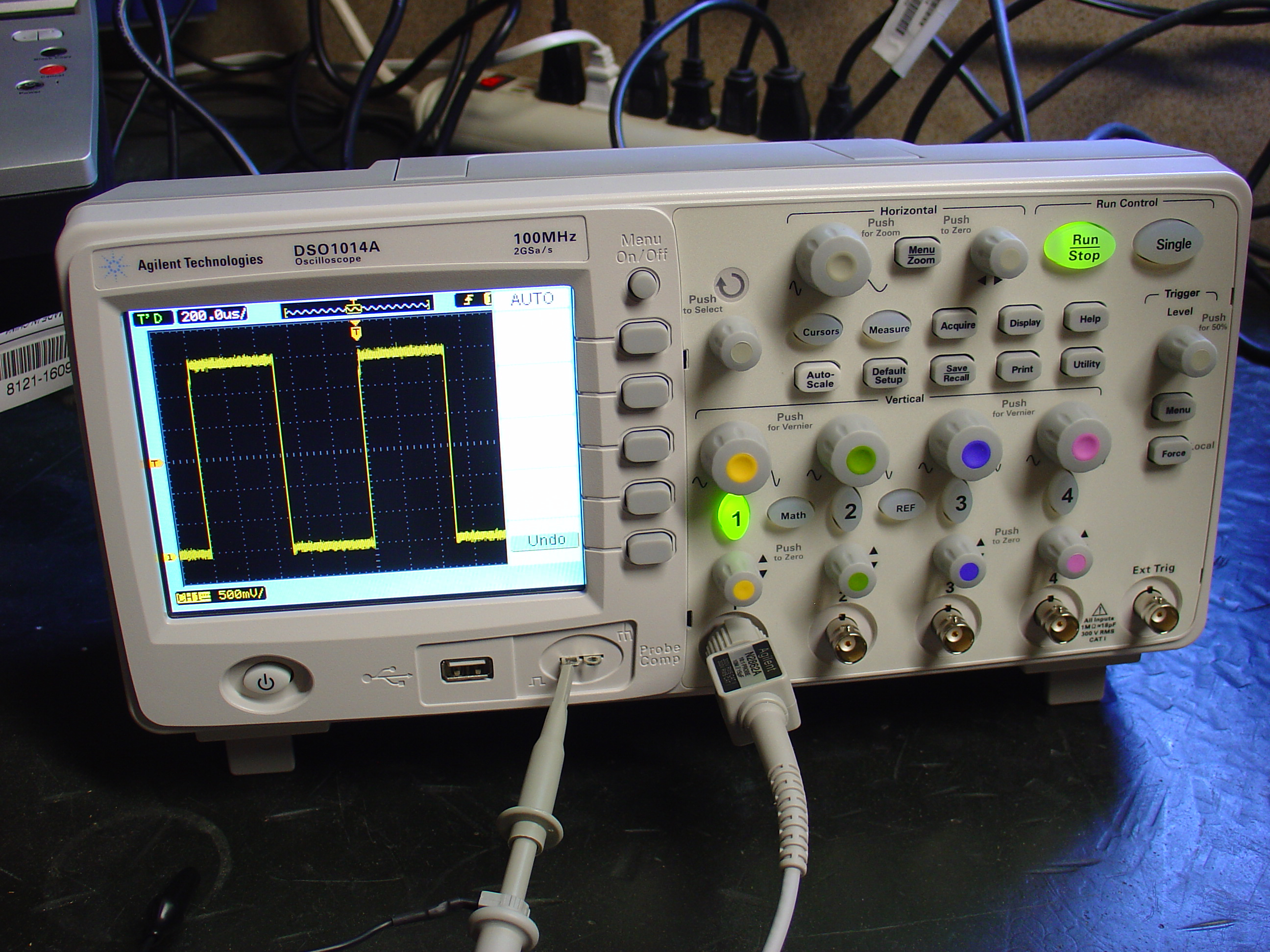
Oscilloscope vs. Digital Multimeter vs. Voltmeter
- Voltmeter – Measures only a single static voltage value
- Digital multimeter (DMM) –: Measures voltage, current, and resistance, but still provides only numerical readings
- Oscilloscope –: Goes beyond numbers by showing the full waveform of a signal, including shape, frequency, amplitude changes, and timing
This makes oscilloscopes indispensable for troubleshooting and analyzing signals that change dynamically over time—something multimeters and voltmeters cannot reveal.
What Does an Oscilloscope Do?
An oscilloscope captures voltage signals and displays them as waveforms. With it, you can:
- Monitor amplitude changes
- Measure frequency and period
- Identify distortions or irregularities
- Compare two signals (input vs. output)
The oscilloscope’s purpose is to make invisible electrical activity visible, providing insight into how circuits behave.
What is an Oscilloscope Used For?
An oscilloscope is typically used in:
- Electronics and circuit design – Checking amplifiers, filters, and digital circuits
- Education and laboratories – Teaching students how signals behave
- Audio and sound engineering – Visualizing sound waveforms
- Communications and RF applications – Ensuring stable frequencies and clean signals
- DIY and maker projects – Debugging microcontrollers, sensors, and power supplies
What does an oscilloscope help us see? The answer is: the hidden signals that power modern electronics.
How Does an Oscilloscope Work?
Oscilloscopes work by converting electrical signals into a graphical waveform on a screen. The horizontal axis shows time, while the vertical axis shows voltage.
Probes and Connections
Probes connect the oscilloscope to the circuit under test. Different probe types allow safe and accurate measurements across a range of voltages. It’s important to use quality oscilloscope accessories such as probes, cables, and clips to maintain reliable results.
Triggering Explained
Without triggering, waveforms appear as a moving blur. The trigger function locks onto a repeating part of the signal, such as a rising edge, so the waveform looks stable on the display. For a deeper dive into this subject, see our guide on oscilloscope triggers.
Visualizing Waveforms
Once captured, waveforms reveal details like gain, phase shift, distortion, and signal timing. An oscilloscope can be used to demonstrate how a low-pass filter reduces signal amplitude and shifts its phase. If you want to try hands-on waveform analysis using the waveforms software, check out our WaveForms oscilloscope guide.
Types of Oscilloscopes
- Analog Oscilloscopes – The earliest designs, using cathode ray tubes (CRTs) to display signals directly. While largely replaced by digital models, they are still valued for their simplicity in certain applications.
- Digital Storage Oscilloscopes (DSOs) – The most common type today, capturing and storing signals digitally for detailed analysis. They allow advanced measurements and long-term waveform storage.
- Mixed Signal Oscilloscopes – Versatile instruments that combine analog and digital measurement capabilities. These scopes are especially useful when working with systems that integrate microcontrollers, logic signals, and analog circuitry.
- USB Oscilloscopes – Compact and affordable devices that connect directly to a computer. By pairing with software, such as Digilent’s WaveForms, they deliver professional-grade analysis in a portable format.
Who Uses an Oscilloscope?
Oscilloscopes are essential tools for:
- Engineers and technicians designing and repairing circuits
- Educators and students learning electronics theory and practice
- Hobbyists and makers experimenting with DIY projects
- Audio and RF specialists analyzing sound and radio signals
How Much Does an Oscilloscope Cost?
The cost depends heavily on type and performance:
- Entry-level USB oscilloscopes: ~$50–$400
- Mid-range benchtop/portable digital scopes: $400–$2,000
- High-performance lab models: $5,000–$50,000+
For affordable and educational solutions, check out Digilent’s oscilloscope range.
History of the Oscilloscope
The earliest form of the oscilloscope was developed in 1897 by Karl Ferdinand Braun, who created the first cathode-ray oscilloscope (the Braun tube). Early versions were often referred to as oscillographs, mechanical or electrical devices that recorded waveforms.
The term “oscilloscope” was first introduced around 1907, and through the 20th century, the instrument evolved from bulky analog CRT-based devices into today’s powerful digital storage oscilloscopes that fit on a benchtop or even in a pocket.
FAQs About Oscilloscopes
Why use an oscilloscope instead of a multimeter?
Multimeters give static readings, while oscilloscopes display full waveforms, revealing changes in voltage over time.
Are oscilloscopes still used?
Yes, modern digital oscilloscopes are widely used today in engineering, education, and industry.
Can an oscilloscope measure AC and DC?
Yes, oscilloscopes can display both AC (alternating current) and DC (direct current) signals.
Can an oscilloscope measure current?
Yes, with a current probe that converts current into a measurable voltage signal.
Is a multimeter an oscilloscope?
No. A multimeter shows numbers, while an oscilloscope provides a live waveform display.
What type of signal does the tuner produce that is turned into the voltage signal on the oscilloscope?
A tuner produces an intermediate frequency (IF) signal, which is then displayed as a voltage waveform on the oscilloscope.
Who invented the oscilloscope?
The oscilloscope was first demonstrated in 1897 by Karl Ferdinand Braun. The device was later refined throughout the 20th century into the digital oscilloscopes we rely on today.


Oscilloscope helps us to determine the electrical voltage signal through its use.we can analyse it in a CRO tube.