

If you’ve been keeping up with technology, you have probably heard of the Internet of Things (IoT). This sounds a lot like one of those buzzwords that have phrases like, “It will revolutionize everything”. Well, today we’re going to talk about the actual Internet of Things and how it is going to change everything.

To understand the Internet of Things, you have to understand what the Internet is. The Internet is one of the most complicated things ever created by people, but we can narrow the Internet down to a pretty understandable description. The Internet is a bunch of websites that people can access! That’s (pretty much) it: someone hosting a website, and people going to that website. That’s the Internet, but on a practically infinite scale.

So what does that make the Internet of Things? Well, the Internet of Things is the connectivity between everyday objects. This doesn’t really help anyone, so having an example is a better approach.
Imagine setting your alarm to wake up in the morning. When the alarm goes off, your coffee starts brewing. The next day you set your alarm to a different time, and when the alarm goes off, coffee still starts brewing.
That’s what the Internet of Things can do, connecting devices to each other. Embedded systems are what make that connectivity possible.
While there’s no single definition of IoT that everyone agrees on, here’s how we at Digilent think about it and the products and resources we recommend for getting started.
Internet of Things for Digilent is defined as “Products that are connected to the internet that either another machine or a user can interact with remotely.” To begin this process, a user needs to have data that they wish to read (sense), measurement/data that they wish to send (processing), a way to move the data (connectivity), a place to store the data (internet), and a way to view/interact with the data (application).
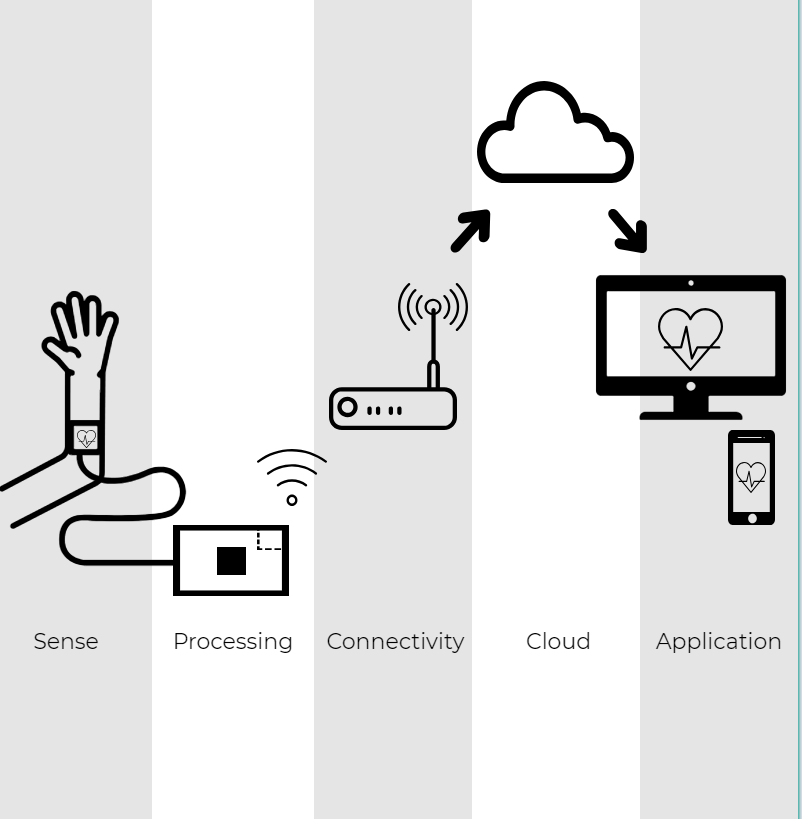
Best overall IOT application:
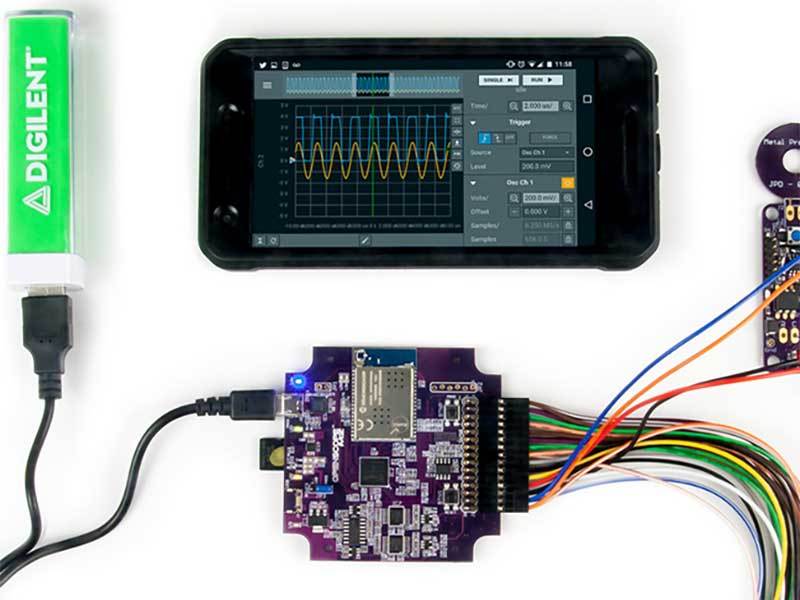
Product: OpenScope MZ
Who: Someone who wants to use an existing IOT device and wants the option to go deeper into the different levels of IOT.
We rank our OpenScope MZ as the best IOT product that Digilent offers. It can be used as a device to instrument your application through measurement and connecting to the internet. It can also be used as a development tool (similar to the Wi-Fire board previously mentioned) to understand the low-level basics of connectivity.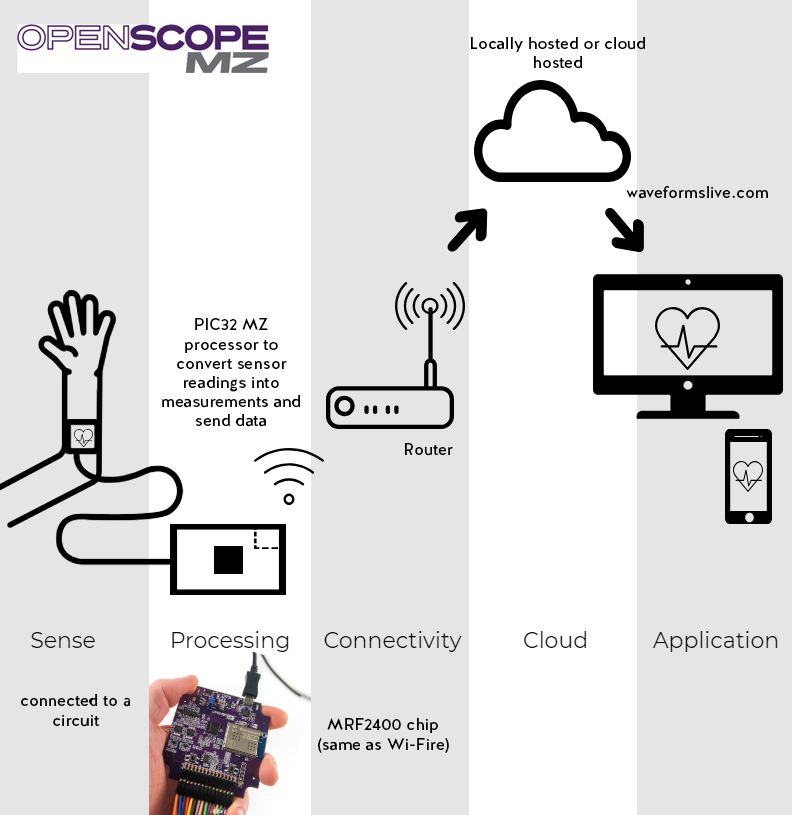
Sense: The OpenScope Schematic
Processing: The OpenScope MZ Firmware
Connectivity: DEIPcK (same as the Wi-Fire)
Cloud: The Digilent Agent
Application: Waveforms Live
The OpenScope MZ is open-sourced, and users can look “under the hood” and understand how each segment of IOT works with one another. Users can measure data and send it to the cloud and see the data visualized in an internet browser. The stream is bi-directional, as users can also send commands to the device remotely using the internet browser.
For the user that isn’t quite sure where to start, this would be the best entry point.
Best Product To Learn TCP/IP

Product: WF32 and Wi-Fire (formerly chipKIT WF32 and chipKIT Wi-Fire).
Who: Someone that is wanting to learn the theory behind connecting a device to the internet.
The WiFi module onboard the Wi-FIRE/WF32 is intended for use with the Digilent Embedded (DE) network libraries, DEIPcK and DEWFcK.
Originally written to target chipKIT (ck) boards, the DEIPcK library provides TCP/UDP/IP protocol support for all compatible network interfaces supported by Digilent products. These libraries allow a user to understand how to build a TCP/UDP/IP stack from the hardware layer up.
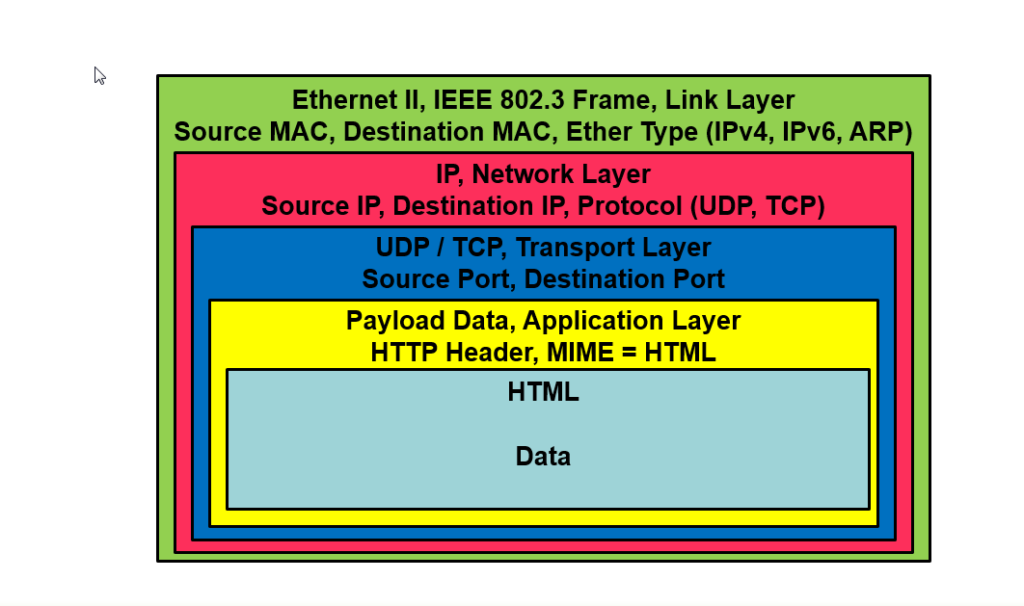
The DEWFcK library provides the additional library support required for connecting to and operating with the Microchip MRF24WG0MA wireless network modules. The DEIPcK library is different than the DNETcK network libraries. DEIPcK is the Digilent Embedded Open Source IP stack that supports both the MX and MZ processor lines, while the DNETcK IP stack is built on top of the Microchip MLA proprietary stack and can only be used with the WF32 (MX processor).
Best Product to Build Your Own Networking Hardware:

Product: Arty A7 or any Xilinx FPGA board with an Ethernet MAC on board.
Who: Someone who is curious about server design and mechanics.
If you have a particular interest in the “connectivity” portion of IOT, then learning how servers work and are made is a good next step. We introduce the $99 Arty A7-35T as the board for you. The board comes with an extensive set of on-board peripherals (USB, UART, SPI, I2C, and an onboard Ethernet MAC), has a generous amount of memory, and for anything not already on the board, offers Arduino/Pmod expansion connectors. Users can create a Microblaze processor (a processor that is implemented in FPGA fabric) to create their own server.
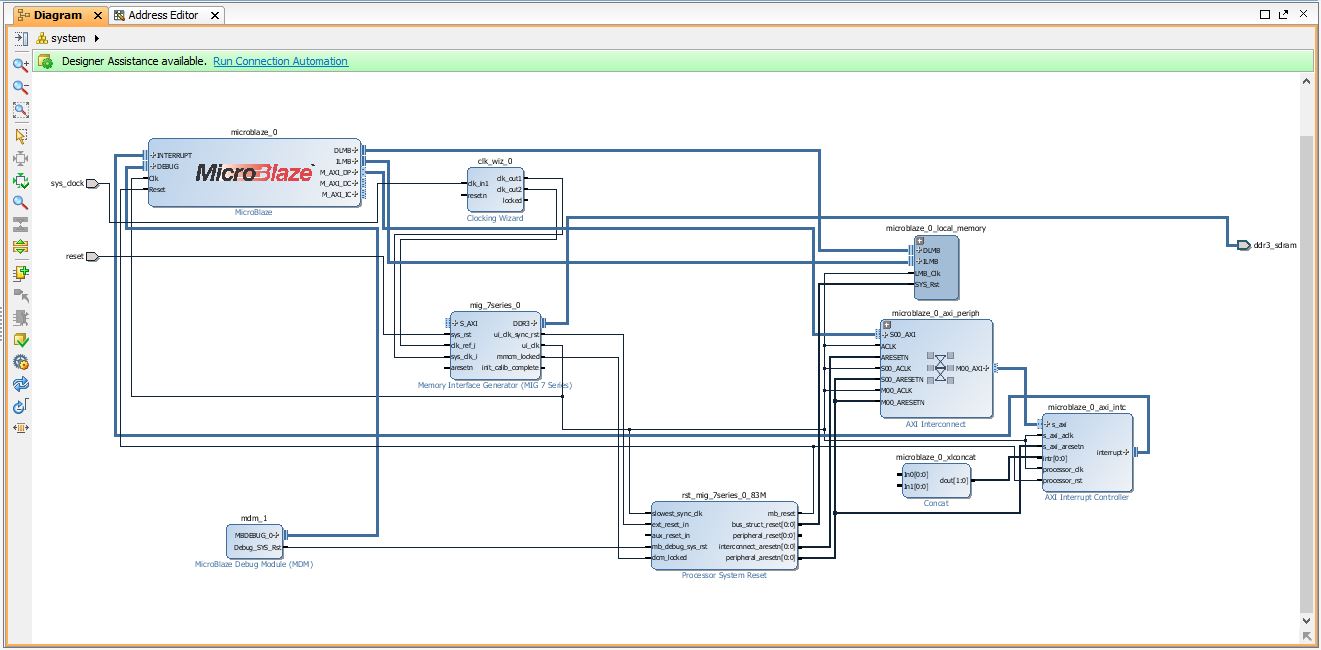
There is a “Getting Started with Microblaze Server” tutorial that is a good place to start, as well as workshop materials. Watch this video to get an introduction to Arty, and see the web server demo in action!
Tutorial: Getting Started with Microblaze Servers
Get your design on the internet quickly!
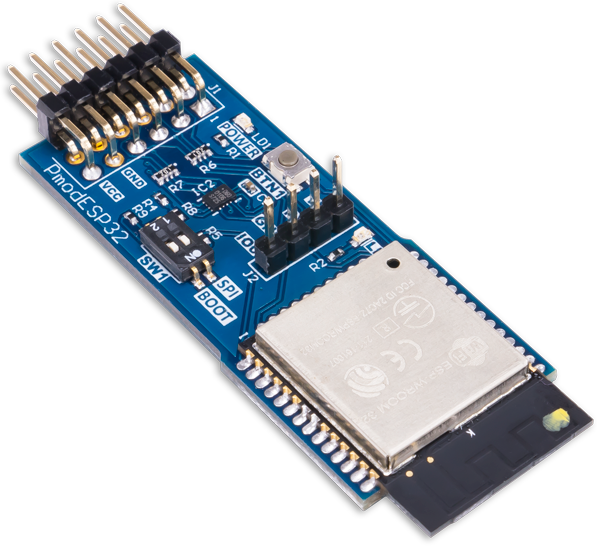
Product: Pmod ESP32
Who: If you want to create your own IOT device and need to do it quickly!
On the other end of the IOT spectrum are the people who don’t want to deep dive into server mechanics or build their own TCP/IP stack. Our final product highlight is the ideal starting point for those designers. At under $30 dollars, the Pmod ESP32 allows users to connect any board to the internet through simple SPI commands. Without the need to build the IP stack from scratch (as with the Wi-Fire and WF32), a user can focus on other aspects of their IOT design rather than connectivity.
The module on the Pmod ESP32 has been around for years, so there is a wealth of example projects and documentation. The throughput is fast enough to stream audio, but is ideally suited for low-power sensor network projects. We encourage you to go over to the product page and check it out!
These are just a few of our IOT Products. For the full list and to see other complementary products, check out the IOT category on the Digilent store!


Great content useful for all the candidates of IOT training who want to kick start these career in IOT training field.