
Radio Frequency (RF) Daughterboards
NI Ettus RF Daughterboards are essential components for expanding the capabilities of your USRP devices in the world of Software-Defined Radio (SDR). These daughterboards provide specialized frequency coverage, ensuring that your SDR setup meets the requirements of diverse applications. Whether you're working on signal processing, wireless communication, or network testing, Ettus RF Daughterboards help you achieve high-performance results.
One important thing to consider is the bandwidth capability of the USRP device selected. While a daughterboard may provide up to 40 MHz of RF bandwidth, this does not guarantee the USRP device can transfer an equal bandwidth to the host machine. If a user requires a specific maximum bandwidth, they should ensure both the daughterboard and USRP device meet those requirements. If you need help deciding which daughterboard best suits your application needs, please view the Ettus Knowledgebase article.

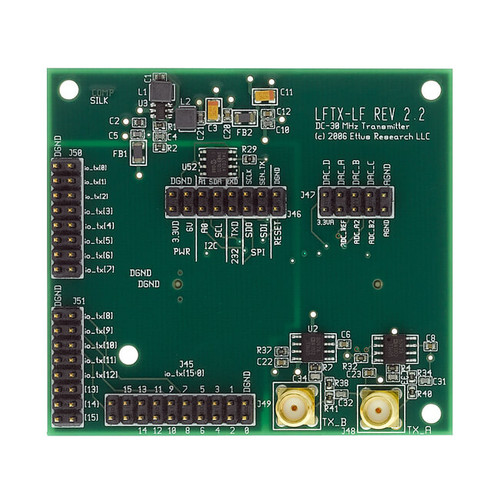
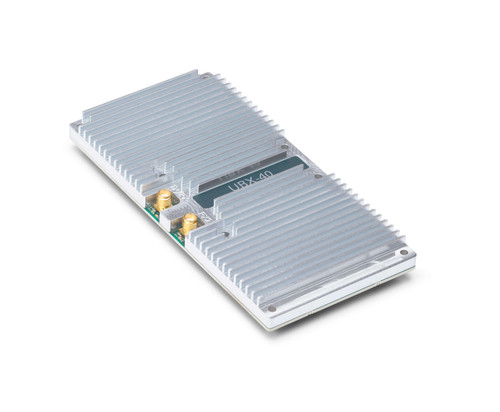


What is a Daughterboard?
A daughterboard is an additional hardware module designed to interface with your USRP system, offering enhanced functionality. It adds specific capabilities to your USRP by expanding its frequency range and bandwidth options, making it a crucial component in SDR applications.
When selecting a daughterboard, it’s important to match it with your USRP device to ensure compatibility, especially regarding bandwidth and frequency requirements. A daughterboard typically provides up to 40 MHz of bandwidth, but remember that the performance is limited by the bandwidth capability of your USRP device. Both components should meet the desired bandwidth specifications for optimal performance.
For a wide selection of SDR products, check out our Software-Defined Radio Collection.
What to Consider When Choosing an RF Daughterboard
When deciding which RF Daughterboard to choose for your USRP system, keep these factors in mind:
- Frequency Range: Make sure the daughterboard you choose covers the frequencies necessary for your application.
- Bandwidth: While daughterboards may provide up to 40 MHz of RF bandwidth, ensure that your USRP device supports the required bandwidth to ensure smooth data transfer and processing.
- Compatibility: It's essential that the daughterboard and USRP device are compatible in terms of both frequency range and data transfer capabilities.
Daughterboard vs Motherboard
Understanding the difference between a daughterboard and a motherboard is key when expanding your SDR system.
- Motherboard: The main board in your USRP system. It serves as the central hub, connecting all components and managing data processing.
- Daughterboard: A secondary board that connects to the motherboard, offering specialized features like extended frequency ranges or additional signal processing capabilities. It "daughters" the motherboard, adding extra functionality.